Dubai property in 2026: the honest read on a record market.
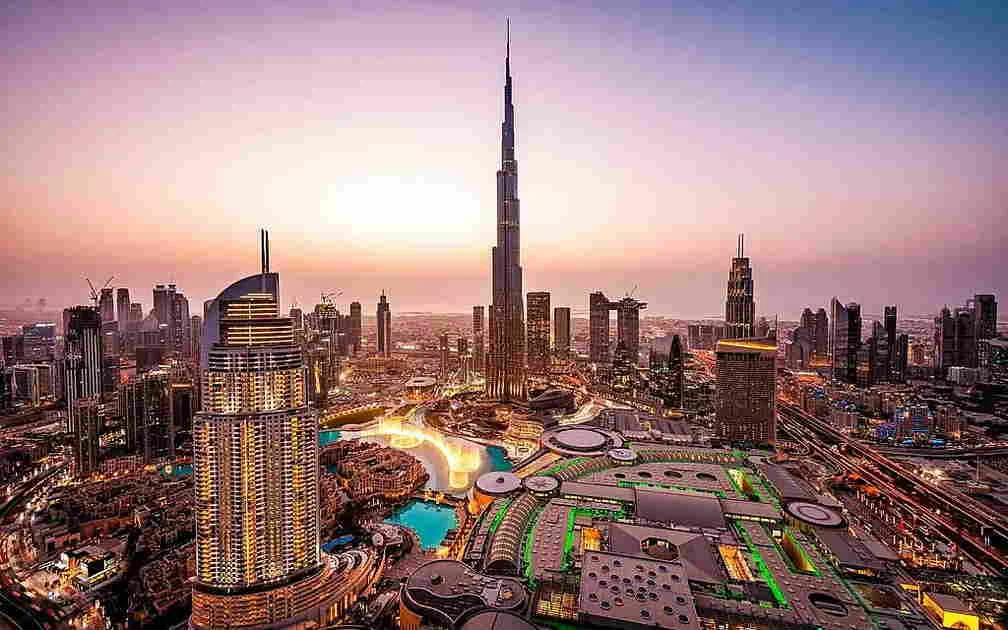
2025 was Dubai's fifth record year in a row. Depending on which line of the Land Department's report you read, the city cleared somewhere between AED 682 billion in pure sales and AED 919 billion once you add mortgages and gifted transfers — either way, comfortably ahead of 2024's AED 761 billion. Then January 2026 posted AED 72.4 billion, the single most valuable month in the city's history. So the interesting question for 2026 isn't "was it a good market." It's "does it hold — and for whom?"
I've been operating in this market since we opened TRPE Dubai in 2022, and watching it far longer. Let me give you the honest version, not the brochure — because the truth about Dubai in 2026 is more useful than the hype, and more reassuring than the doom.
The one number that explains everything
Off-plan is the story. Roughly 65% of 2025's transactions by volume were off-plan — the third straight year new-build has led the market. This is why the payment-plan launch has become Dubai's dominant sales event, and it's why the whole market moves faster here than anywhere else I've worked. It's also the source of the single biggest debate hanging over 2026: supply.
Here the honest answer starts with a fight between serious analysts, and I'd rather show you the fight than pretend it isn't happening.
The correction-vs-growth debate, laid out plainly
On one side, Fitch Ratings called for a correction of up to −15% across late 2025 into 2026, on a simple thesis: prices rose around 60% between 2022 and 2025, while annual deliveries were set to climb from roughly 30,000 units in 2024 toward 90,000 in 2025 and over 100,000 in 2026. Supply growing faster than population, they argue, has one outcome. S&P Global is milder — a possible ~7% dip in apartments, but explicitly no 2008-style crash.
On the other side, ValuStrat forecasts +10% for 2026 (villas doing the heavy lifting), while Knight Frank, CBRE and JLL cluster around a more sober +3% to +8%. That's a forecast range from minus fifteen to plus ten — which, if you take nothing else from this piece, tells you the honest position is "it depends," not "moon" or "crash."
And that's exactly how it resolves. Every credible analyst agrees on the split: villas and prime are resilient; apartments and the mid-market are where the risk sits. The reasons are structural.
Why the two speeds are real
- Villas are genuinely scarce. Only around 15,000 villas are scheduled for delivery in 2026 and barely 5,600 in 2027 (Knight Frank). Against that, villa prices rose roughly 15–19% in 2025. Scarcity plus demand is not a bubble — it's a shortage. Prime followed the same logic: Dubai's luxury segment grew about 25% in 2025, the best-performing major prime market on earth, with Palm Jumeirah up around 31%.
- The apartment pipeline is concentrated — and it's the wrong stock. Roughly two-thirds of upcoming units are studios and one-beds, and about 45% of everything under construction sits in a handful of districts: JVC, JVT, Dubai South, MBR City and Business Bay. If a correction bites anywhere, it bites there first. This is not a citywide risk — it's a postcode-and-product risk.
- Headline supply and real supply are different animals. Here's the number the bears underweight: only about 46% of promised homes were delivered on schedule through 2025 (Knight Frank), and Q1 2026 ran at roughly 43%. Developers routinely deliver a fraction of what's "due." So the scary 120,000-unit pipeline for 2026 more likely lands nearer 110–120k of actual completions across two years. The glut is real in slides; it's softer in cranes.
What's actually holding the market up
Supply is only half the equation. The other half is demand, and Dubai's demand story in 2026 is not speculative froth — it's people moving here.
Dubai's population crossed 4 million for the first time in September 2025 and hit about 4.04 million by November — a gain of roughly 208,000 people in twelve months, the fastest in the city's history. That's about 470 new residents arriving every day against roughly 150 homes being completed a day. The official Dubai 2040 plan targets 5.8 million. The pivotal piece of maths behind the whole debate is this: at ~6% annual population growth, the pipeline gets absorbed; if growth cools to ~3%, the city only needs around 40,000 homes a year — well below what's coming. Which way population runs is the real swing factor, more than any single supply number.
Underneath the people are the mechanics that make Dubai structurally different from London or New York:
- Yield and tax. Gross residential yields average roughly 6.7–6.9% — apartments around 7.2%, villas around 5% (JLL) — against 2.5–4% in London. And there's no personal income tax and no capital gains tax on property held in your own name. That combination simply doesn't exist in the other global cities investors compare us to.
- The Golden Visa got wider, not narrower. The AED 2 million property threshold survived its 2026 review, and a February 2026 change removed the old requirement to put AED 1 million down upfront — meaning mortgaged and off-plan purchases now qualify. Residency is now attached to a far larger slice of the market.
- Capital keeps arriving. The UAE was the world's number-one destination for millionaire migration in 2025 (Henley & Partners), and the ultra-prime segment shows it: 500 sales above USD 10 million in 2025, worth USD 9.05 billion — Dubai is now number one in the world for $10m-plus deals, including a record USD 149.7 million penthouse at Bugatti Residences.
The bit nobody likes to mention
An honest market read includes the things that can go wrong, so here they are. The apartment oversupply in those specific districts is real, and "below original-price" resale units were already appearing in early 2026. Financing got tighter, too: the Central Bank now bars banks from lending you the 4% DLD fee and 2% broker commission, so even on an "80% mortgage" you're bringing roughly 25–30% in cash to completion. And Dubai is not immune to geopolitics — a regional escalation in early March 2026 reportedly cut transaction volume by around a quarter for a fortnight, with modest closing discounts. Prior tension-driven dips here have tended to be 3–8% and recover within 6–12 months, but they're real, and anyone who tells you the market only goes up is selling you something.
So what would I actually do in 2026?
Buy the scarcity, not the glut. In practice that means favouring villas, townhouses and genuinely prime or waterfront locations over another studio tower in an already-saturated district. It means judging a developer by their delivery record, not their render — because in a market where only half of stock arrives on time, the developer who actually hands over is the one protecting your money. It means treating the payment plan as a schedule, not a strategy, and pricing your off-plan against what a finished, keys-in-hand unit costs two roads over. And it means having a clear reason someone buys this from you in three years — end-user demand, not just the next investor betting on the same appreciation.
Dubai in 2026 is not a bubble about to burst, and it's not a one-way bet either. It's a maturing market that has stopped rewarding everyone equally and started rewarding the people who choose well. That's actually a healthier place to be than the euphoria of 2024 — and for a serious buyer, a far better one.
Saied Nazemi — Founder, TRPE Real Estate & OffPlans.com
Dubai Land Department (2025 & Q1 2026 figures); Property Finder & Betterhomes market reports (off-plan share, 2025 sales); Knight Frank (prime growth, villa supply, $10m-plus segment, Wealth Report 2026); Fitch Ratings (correction call, May 2025); S&P Global; ValuStrat, CBRE & JLL (2026 forecasts, yields); Dubai Statistics Center (population); Henley & Partners (millionaire migration, 2025); Central Bank of the UAE (rate and financing rules). Figures are the latest available at time of writing and are directional, not guaranteed.